IN-TREE-NET

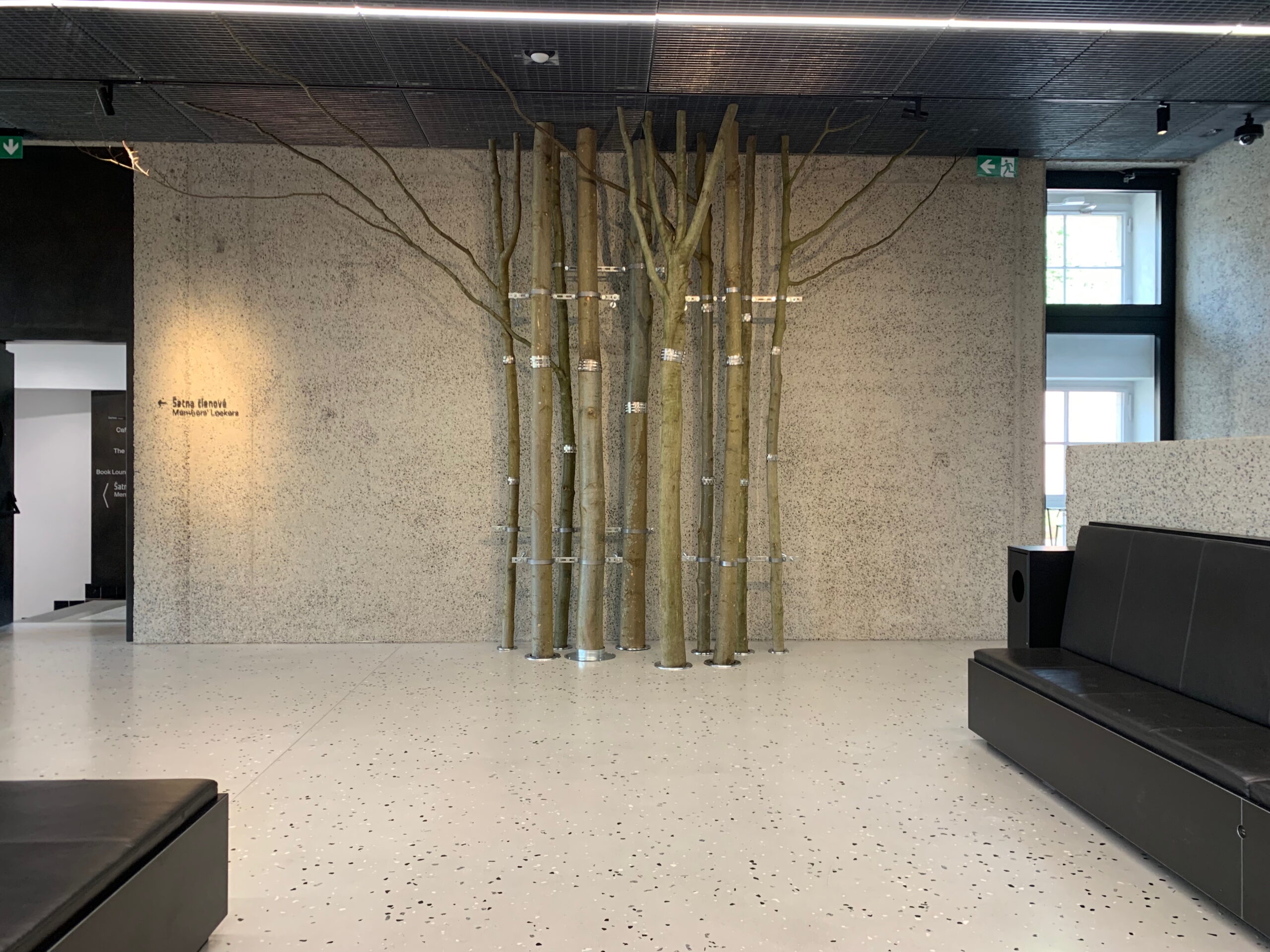
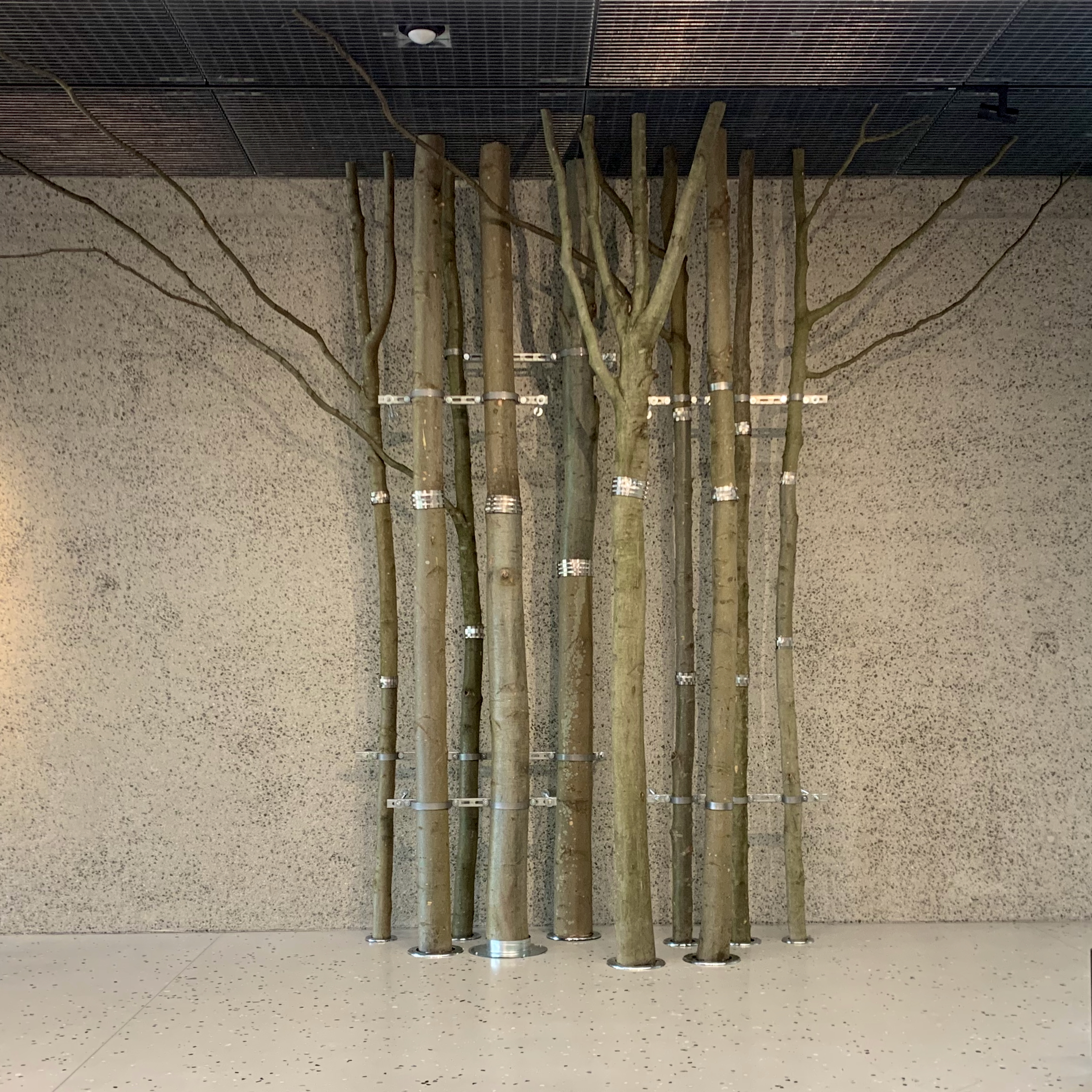
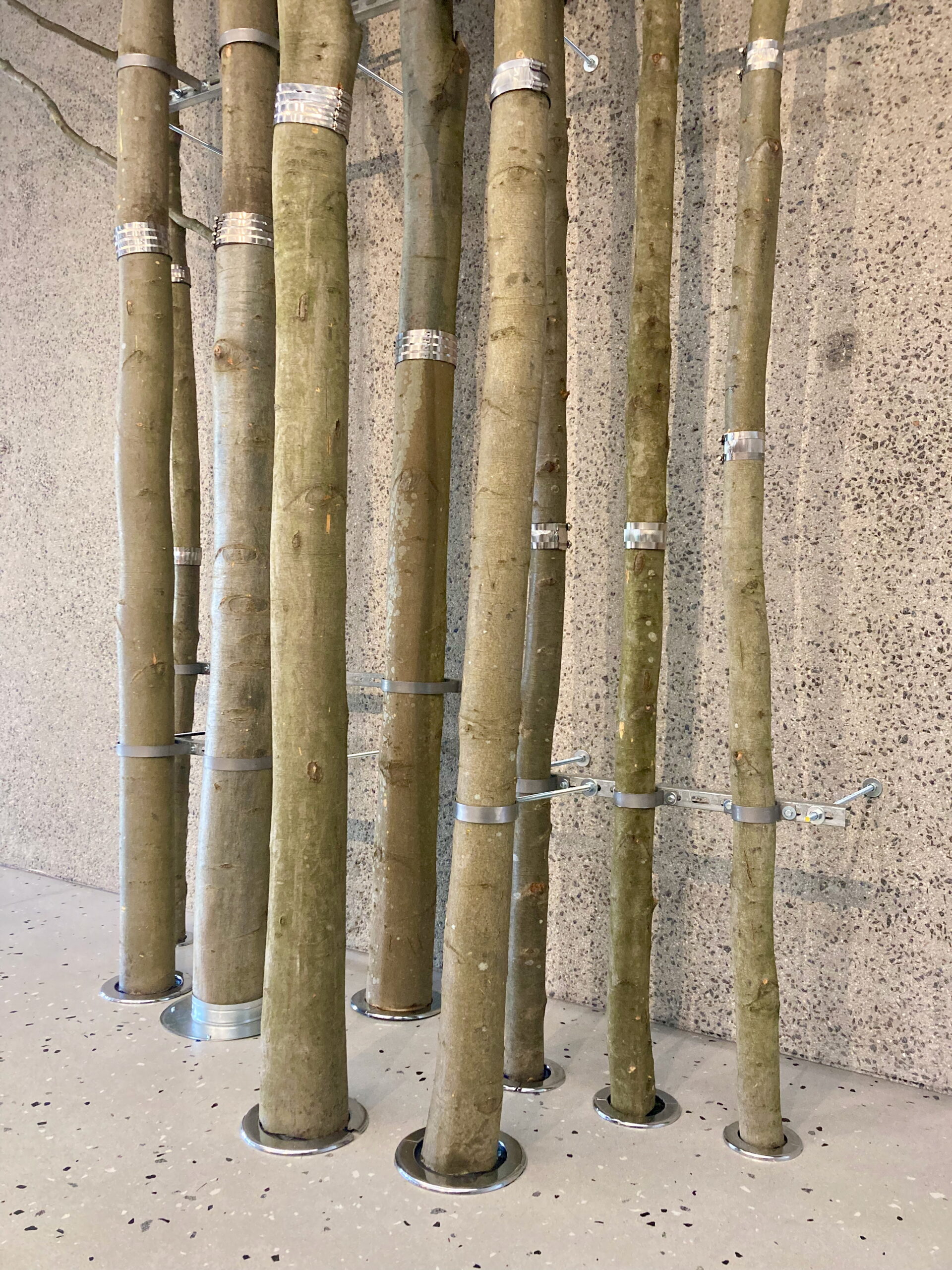
In-Tree-Net, site-specific installation at Kunsthalle Praha, 2025, trees, plumbing hardware
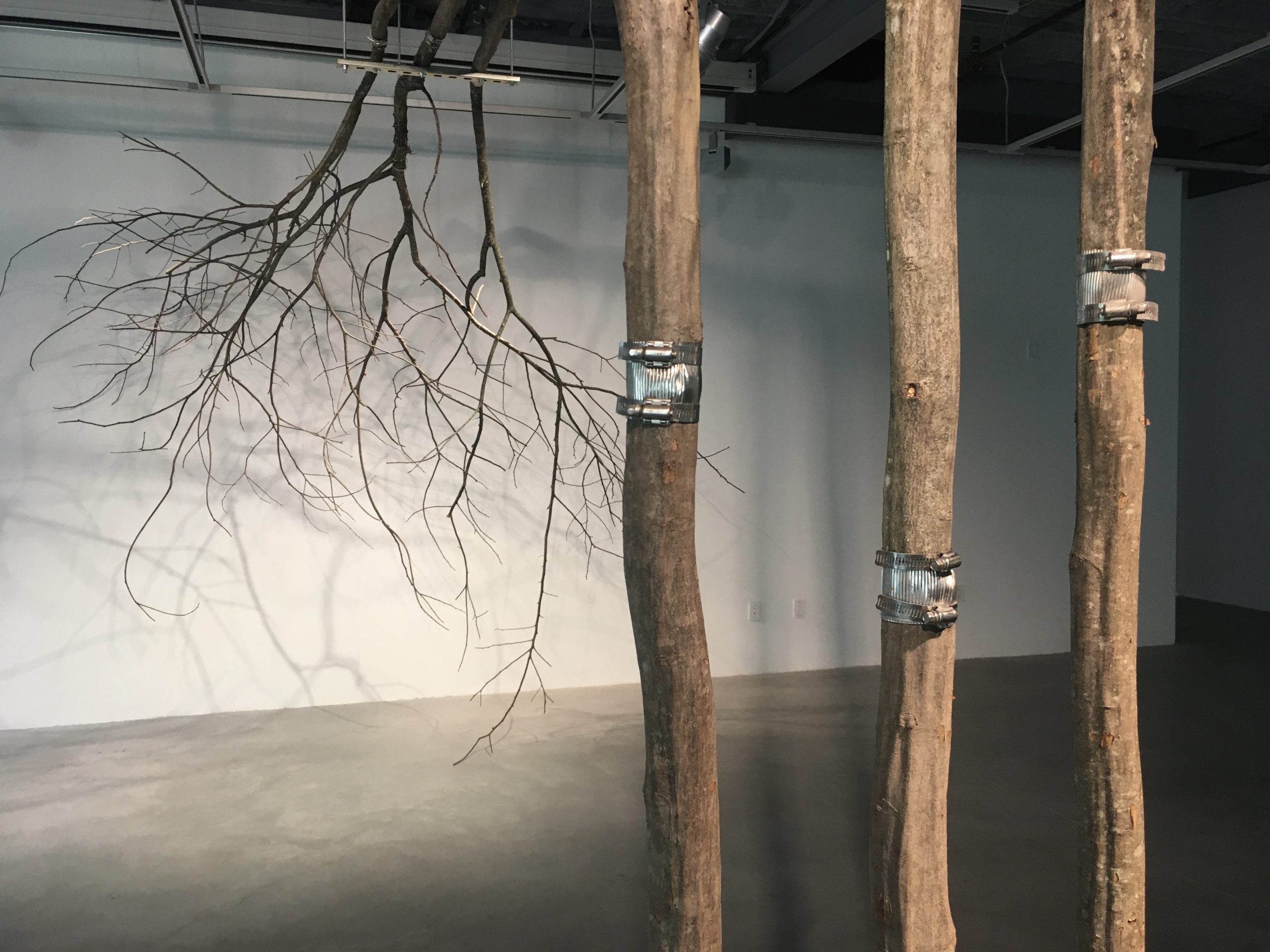
In-Tree-Net is part of an ongoing series of site-specific installations initiated in 2009, constructed from tree trunks and branches mounted across walls and ceilings. Extending through architectural space, the structures mimic infrastructural conduits that sustain contemporary interiors. By drawing parallels between ecological and engineered systems, the work reframes infrastructure as a living network.
Responding to urgent environmental questions, In-Tree-Net examines the interdependence between natural resources and the built environment. Assembled with plumbing components these structures closely resemble conventional engineering systems that bring esential energy like water, gas, or electricity that bring energy into the buildings. This visual convergence confronts industrial language with organic form, exploring the tension between natural and artificial systems.
While trees embody complex, adaptive relationships within forest ecosystems, here they are reduced to linear, functional models, reflecting a mechanistic and utilitarian approach to Nature. In-Tree-Net reveals, what is often concealed: that the indoor lifestyle depends on vital natural resources that architecture tends to cover and hide. It makes visible the hidden connection between the interior comforts and outdoor reality pointing to the environmental dependency of the seemingly independent interior environment.
In-Tree-Net investigates the isolating effects of architecture on contemporary life. It follows the emergence of what the artists describe as Homo Interius—the interior-oriented human who spends much of their existence inside a white cube controlled environments, increasingly detached from surrounding landscapes. Despite unprecedented access to information, this condition often produces a diminished awareness of immediate ecological context.
Critically addressing the tendency to understand nature as a bounded, machine-like system, In-Tree-Net instead presents Nature as an expansive web of relationships that transcends physical and conceptual borders.
The installation suggests that nature cannot be contained by walls or infrastructure; it persists as a connective force that penetrates the built environment. By confronting viewers with this entanglement, the work calls for a renewed awareness of our embeddedness within a shared, larger ecosystem.
-

- In-Tree-Net,Kunsthalle Praha, 2025


-

- In-Tree-Net,Kunsthalle, 2025 Praha
-

- In-Tree-Net, MoCA Westport 2021

-

- In-Tree-Net, MoCA Westport 2021

-

- In-Tree-Net, MoCA Westport 2021
-

- In-Tree-Net, Karlin Studios, 2013

-

- In-Tree-Net, Karlin Studios, 2013

-

- In-Tree-Net, Karlin Studios, 2013

-

- In-Tree-Net, Chatteau Trebesice, 2013

-

- Chatteau Trebesice, 2013


-

- In_Tree=Net, Wave Hill, 2017

-

- In_Tree=Net, Wave Hill, 2017

-

- In-Tree-Net, Gallery Califia, 2011

-

- In-Tree-Net, Gallery Califia, 2011

-

- In-Tree-Net, Gallery Califia, 2011

-

- In-Tree-Net, Gallery Califia, 2011

-

- In-Tree-Net, Gallery Califia, 2011

-

- In-Tree-Net, Gallery Califia, 2011

-

- In-Tree-Net, Gallery Califia, 2011
